
Swimming Pool Waterproofing in Sri Lanka: Leak Diagnosis and Repair
A pool can lose water through supply lines, return pipes, lights, drains, movement joints, cracks or the waterproofing layer. Treating every case as a tiling problem often leads to repeated repairs. Effective swimming pool waterproofing in Sri Lanka begins with evidence about where the water is escaping.
Tropical heat and strong sunlight increase evaporation, while wet and dry cycles stress exposed finishes. Hotels, apartments, schools and homes also need repairs planned around operating hours and water-treatment requirements. A clear diagnosis prevents unnecessary demolition and shortens shutdown time.
How can you tell whether a pool is leaking?
- The water level falls faster than normal evaporation would explain
- Make-up water demand rises without a change in pool use
- Damp patches or mineral deposits appear on nearby walls or ceilings
- Tiles crack, debond or develop persistent dark joints
- The water level repeatedly settles at the same fitting or joint
- Soil beside the pool remains unusually wet or begins to settle
First separate evaporation from leakage
Compare pool-level change with water held in a container exposed to similar weather. This simple comparison can indicate whether loss is greater than evaporation, but it does not locate the defect. Record rainfall, refill volumes and pump operating conditions so the result is meaningful.
If loss changes when the circulation system runs, pressure testing may be needed. Isolate lines and fittings methodically. Dye testing around lights, inlets, outlets and visible cracks can help identify local flow, while accessible areas below or beside the pool should be inspected for moisture paths.
Inspect the concrete shell before selecting a membrane
Remove loose finishes where necessary and map cracks, honeycombs, construction joints and previous patches. Determine whether cracks are dormant or still moving. A membrane can bridge limited movement within its design capacity, but it cannot stabilise a structural defect or compensate for unsound concrete.
- Remove loose tiles, adhesive, laitance and contaminated material.
- Repair honeycombs and defective concrete with compatible repair mortar.
- Treat cracks according to their cause, width, movement and water condition.
- Form smooth fillets at wall-to-floor junctions where the system requires them.
- Prepare drains, lights and pipe sleeves for continuous membrane detailing.
- Confirm the shell is sound, clean and within the membrane's moisture limits.
Choose a system rated for permanent water immersion
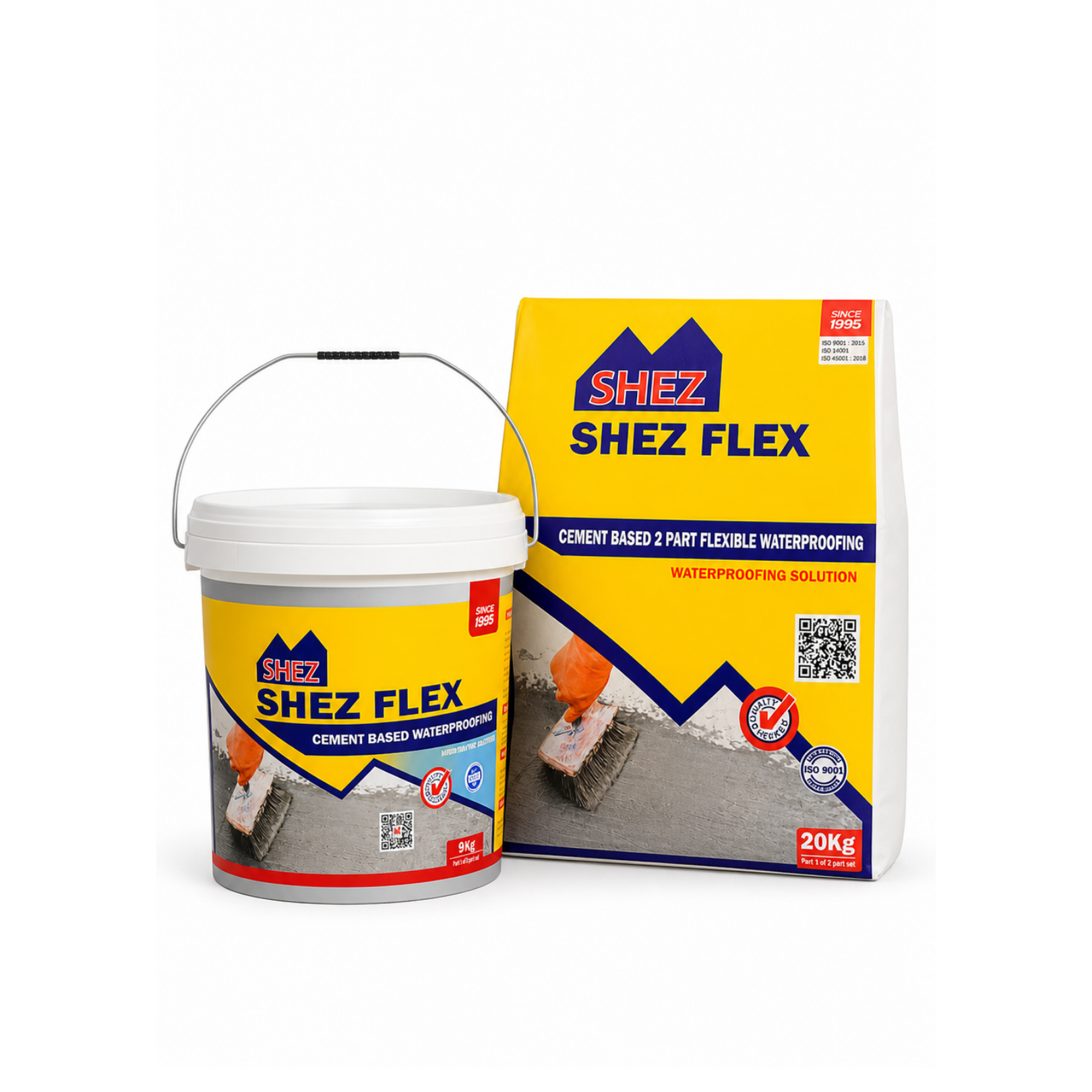
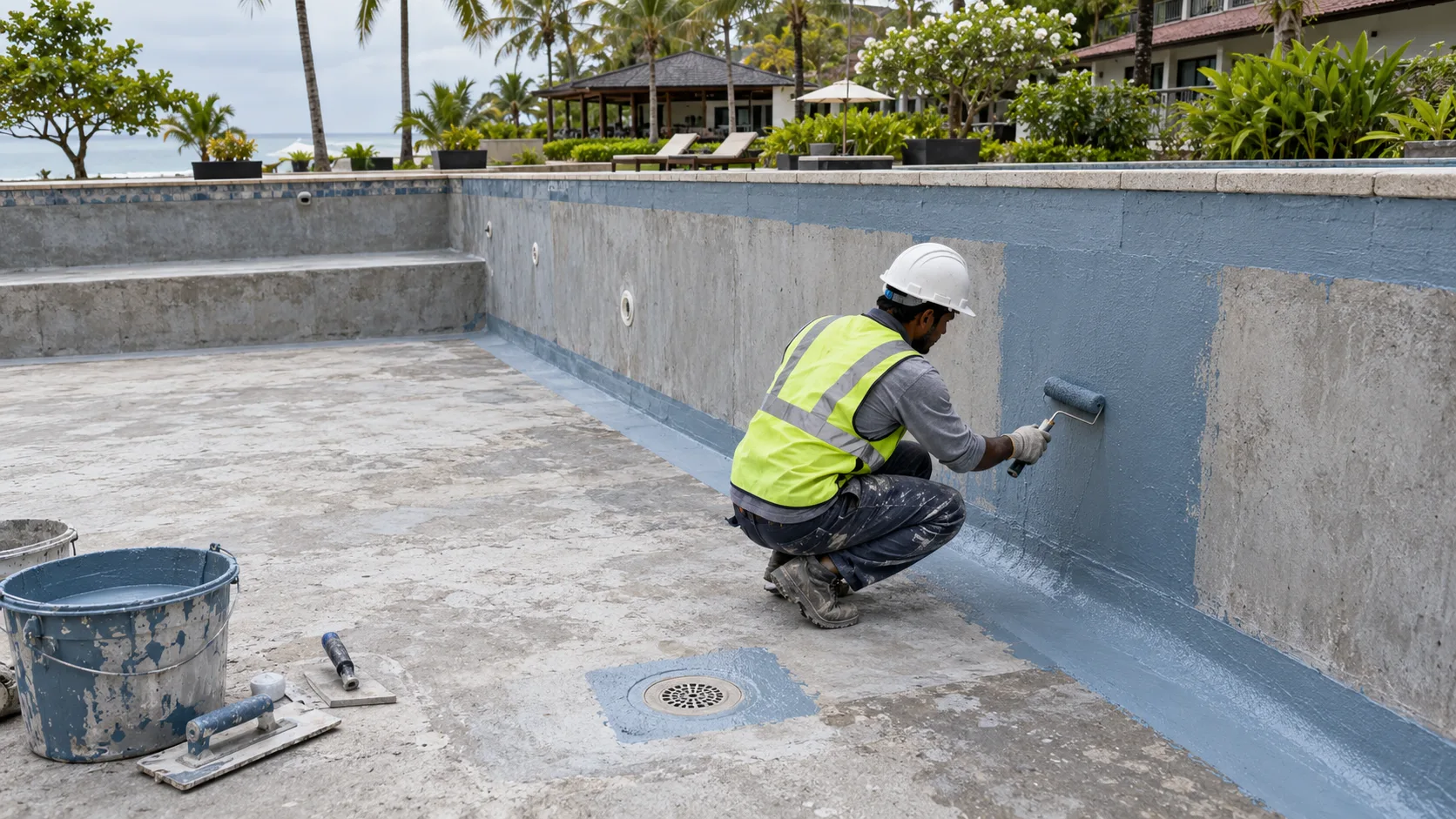
Flexible cementitious waterproofing is commonly used beneath pool tiles because it bonds to prepared concrete and accepts compatible tile adhesive. Other systems may be suitable for particular substrates and finishes. The complete build-up—not one product—must be approved for continuous immersion, treated water and the expected movement.
Apply the specified primer, reinforcement, coat sequence and coverage. Pay particular attention to internal corners, steps, overflow channels, drains, lights and pipe penetrations. These details experience geometry changes and are more vulnerable than the open face of a wall.
Tile installation is part of the waterproofing outcome
Use adhesives and grouts that are compatible with the membrane, pool water and tile type. Avoid voids behind tiles, especially at steps and overflow edges. Movement joints must continue through the finish with a suitable flexible sealant; filling them rigidly with grout can transfer movement into the tiles.
Testing and recommissioning the pool
- Inspect membrane continuity and details before covering them
- Carry out the specified controlled water test at the correct stage
- Protect the membrane during tiling and equipment installation
- Allow adhesives, grout and sealants to cure fully
- Fill the pool in the sequence recommended for the completed system
- Balance water chemistry to protect finishes and metal components
When a local repair is enough
A local repair can be appropriate when testing identifies one accessible fitting, pipe or isolated dormant crack and the surrounding build-up remains sound. Widespread tile debonding, multiple cracks, failed joints or an unknown membrane history usually justify a broader condition assessment before choosing a patch.
Swimming pool waterproofing FAQs
- Will regrouting stop a swimming pool leak?
- Regrouting may correct defective surface joints, but grout is not a substitute for the main waterproofing layer. Plumbing, cracks, penetrations and membrane defects must be ruled out first.
- Can a pool be waterproofed without removing every tile?
- Some local defects can be repaired with limited removal, but a failed concealed membrane or unsound tile bed generally requires enough access to prepare and treat the underlying substrate properly.
- How long does a pool waterproofing repair take?
- Duration depends on drainage, investigation, demolition, concrete repair, curing, membrane application, testing and finishing. A realistic programme should include every curing and inspection stage rather than only application time.
Pool waterproofing by H.E. Engineering
H.E. Engineering provides waterproofing, crack treatment and concrete rehabilitation for swimming pools and other water-retaining structures in Sri Lanka and the Maldives. Our team assesses the leak path and coordinates substrate repair, membrane detailing, testing and compatible finishes as one system.