

Why Concrete Cracks — and How to Repair It Properly
Concrete is strong in compression but weak in tension, so cracking is, to some degree, normal. The real question is whether a crack is cosmetic or a symptom of something that will worsen — and which repair method will restore strength and durability rather than just hide the problem.
Common causes of cracking
- Plastic shrinkage: fine surface cracks that form while fresh concrete is still curing, usually from rapid drying.
- Drying shrinkage: as concrete loses moisture over weeks it contracts, opening hairline cracks.
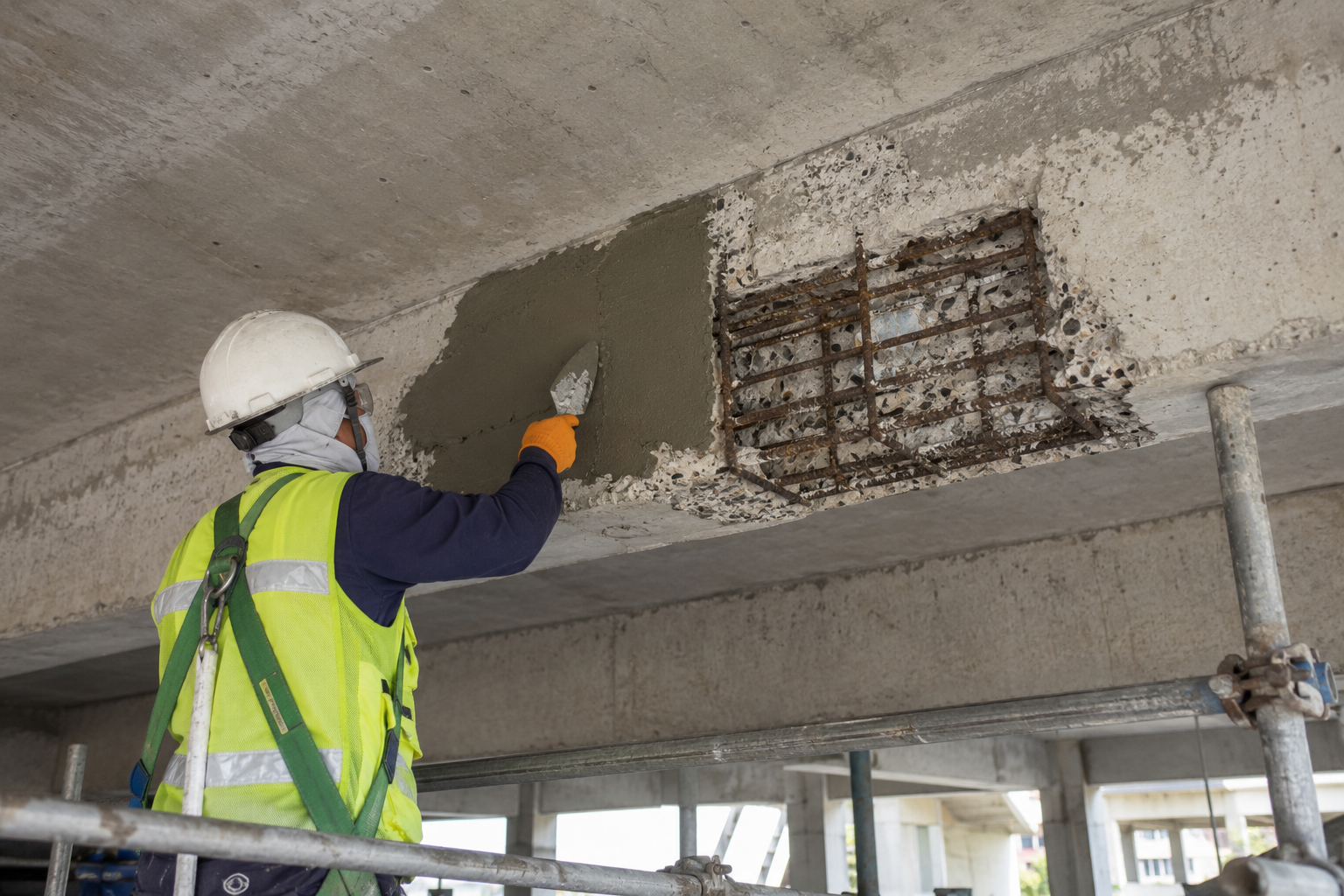
- Reinforcement corrosion: rusting steel expands and forces the concrete cover off — visible as cracking and spalling.
- Structural overload or settlement: wider, directional cracks that may indicate a load or foundation issue.
- Thermal movement: expansion and contraction at joints and large pours.
Diagnose before you repair
The width, pattern and location of a crack tell you a lot. Map cracks, note whether they are active (still moving) or dormant, and check for water seepage or exposed, corroding steel. A repair specified without diagnosis often fails because it treats the symptom and not the cause.
Proven repair methods
- Epoxy injection: bonds and structurally restores dormant cracks in load-bearing concrete.
- Polyurethane injection grouting: ideal for arresting active water seepage, because it reacts with water and expands to seal the path.
- Patch repair: removing defective or spalled concrete, treating the steel, and rebuilding with cementitious or epoxy mortars.
- Micro-concrete & fibre systems: for structural strengthening of beams and columns where section or capacity must be restored.
Protecting the repair
A durable repair addresses the cause — for corrosion that means treating or protecting the reinforcement and restoring proper cover, then sealing the surface against future water and chloride ingress. Skipping this step simply resets the clock on the same failure.
How we can help
Concrete repair and rehabilitation is one of H.E. Engineering's core services. From crack injection and honeycomb repair to structural strengthening, our team diagnoses the cause and applies the correct system — backed by decades of specialist experience across Sri Lanka and the Maldives.