

Roof Garden and Planter Box Waterproofing: A Guide for Tropical Buildings
A planted roof places soil, roots and stored moisture above a building for years. In Sri Lanka and the Maldives, intense rain can saturate the build-up quickly, while heat and dry intervals stress exposed details. Roof garden waterproofing in Sri Lanka must therefore manage both permanent moisture and sudden tropical downpours.
The waterproofing layer is only one part of the assembly. Root protection, drainage, filtration, overflow capacity, structural loading and maintenance access all affect performance. Treating these elements as separate trades creates gaps at the interfaces.
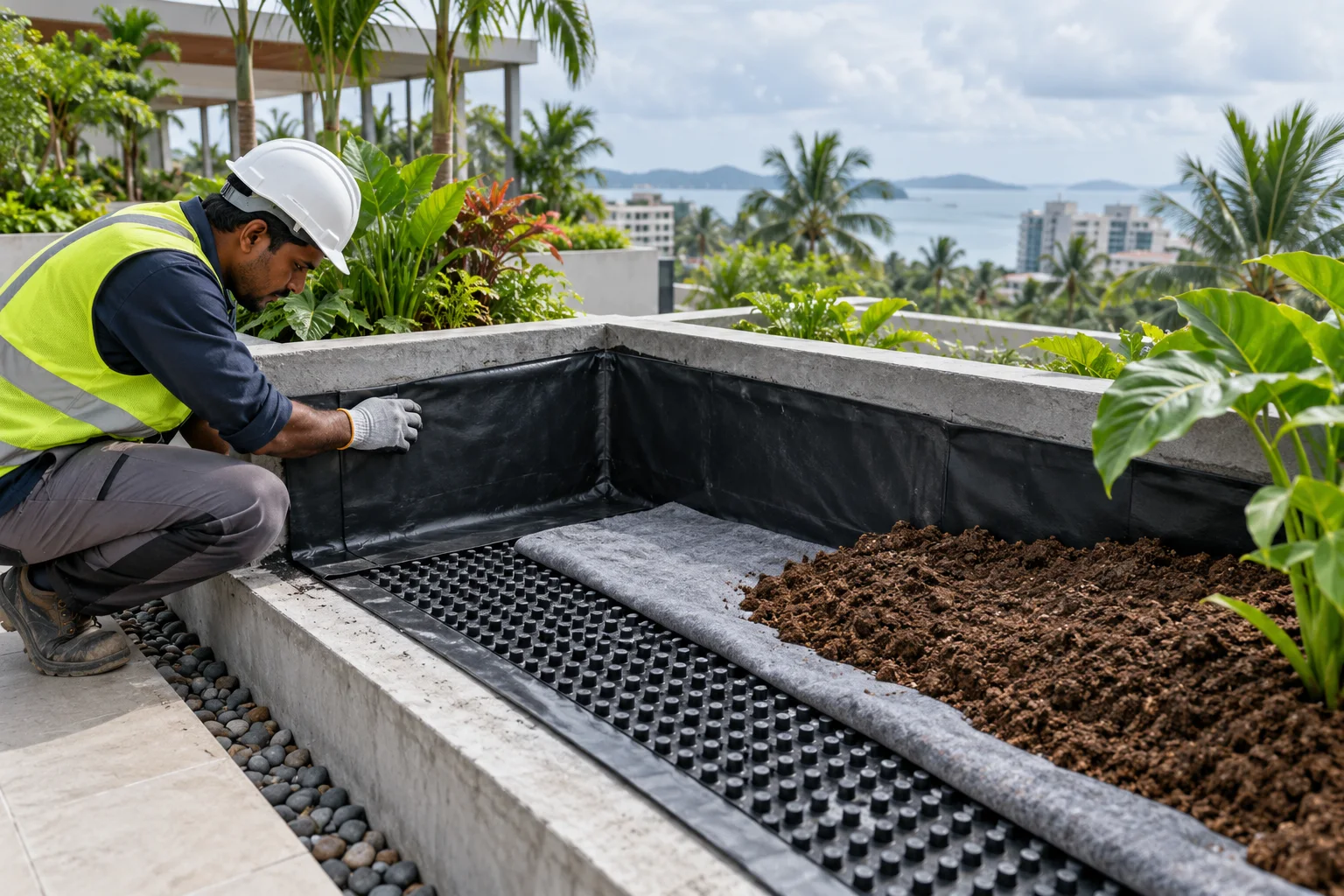
What layers does a roof garden need?
- A sound structural slab with correctly formed falls
- A compatible primer and continuous waterproof membrane
- Root resistance through the membrane or a separate root barrier
- A protection layer that prevents construction damage
- A drainage and water-retention layer suited to the planting design
- A filter fabric that keeps fine soil out of the drainage layer
- Growing medium and vegetation selected for the local climate
The exact sequence changes between conventional and inverted roof designs. The architect, structural engineer, landscape designer and waterproofing specialist should approve one coordinated build-up before work starts.
Why planter boxes leak
- Membrane terminations finish below the soil or irrigation level
- Roots reach an unsuitable membrane or vulnerable joint
- Outlets clog and water rises above protected upstands
- Sharp drainage components or landscape work puncture the membrane
- Movement cracks open at wall-to-base junctions
- Pipes, lights and balustrade fixings penetrate the waterproofing
Design drainage before choosing plants
The slab should direct water toward accessible outlets. Provide inspection chambers above drains so maintenance teams can clear them without removing broad planted areas. Emergency overflows limit water depth if a primary outlet blocks during heavy rain.
Filter fabric must separate soil from the drainage zone without trapping water. The drainage layer needs enough flow capacity for the roof area and design storm. Irrigation should supply the planting without keeping vulnerable upstands continuously wet.
Select a membrane for buried exposure
Liquid-applied or sheet membranes can suit roof gardens when specified as a complete system. The selected material must tolerate permanent dampness, expected movement and contact with adjacent layers. Root resistance should be documented rather than assumed from membrane thickness.
Upstands, corners, construction joints and outlets deserve reinforced or purpose-made details. Continue the membrane high enough to remain protected above the maximum soil, mulch and water level.
Protect the membrane during landscape work
A membrane can pass inspection and fail later when workers place drains, soil, edging or irrigation lines. Install the specified protection layer before other trades enter. Control storage loads and prohibit fixings through the waterproofed surface unless the design includes a sealed penetration detail.
Test before the roof garden is covered
Inspect laps, terminations and penetrations as work proceeds. Where the structure and drainage design allow, conduct the specified controlled water or integrity test before protection and landscaping hide the membrane. Record photographs and marked-up drawings for future maintenance.
How to investigate an existing roof garden leak
- Record whether the leak follows rain, irrigation or both
- Inspect outlet chambers, overflows and visible upstands
- Review drawings for joints, penetrations and membrane terminations
- Divide large planted zones and test them methodically
- Avoid broad excavation until evidence identifies a likely area
- Repair the drainage or irrigation cause alongside the membrane defect
Maintenance after handover
Clear drain chambers, control invasive roots and check irrigation regularly. Keep soil and mulch below designed upstand levels. When adding lighting, furniture or landscape features, consult the waterproofing record before drilling or anchoring into the roof.
Roof garden waterproofing FAQs
- Does every roof garden need a root barrier?
- The assembly needs documented root resistance. Some membranes provide it; other systems use a separate root barrier. Confirm compatibility and continuity at every lap and penetration.
- Can a planter box be waterproofed after planting?
- A lasting repair usually requires removing enough soil and layers to expose, prepare and test the defective area. Surface sealants applied around plants rarely address buried failures.
- Who should coordinate the roof garden build-up?
- The architect or lead designer should coordinate structural loading, waterproofing, drainage and landscape requirements with the specialist contractors before installation.
Waterproofing for planted roofs and podiums
H.E. Engineering provides waterproofing for roof gardens, podiums and planter boxes across Sri Lanka and the Maldives. We work with project teams to resolve outlets, upstands, penetrations and protection before the landscape build-up conceals the system.