
How Sri Lanka's Tropical Climate Damages Buildings — and How to Reduce the Risk
Sri Lanka's climate is one of the reasons buildings here need a different durability mindset from buildings in milder, drier regions.
A structure may experience intense sunshine in the morning, high surface temperatures by midday and heavy rain later in the day. Coastal buildings also face salt-laden air, while year-round humidity can slow drying and keep porous materials damp.
These conditions do not automatically damage a well-designed building, but they increase the consequences of poor detailing and neglected maintenance.
Monsoon rain and prolonged wetting
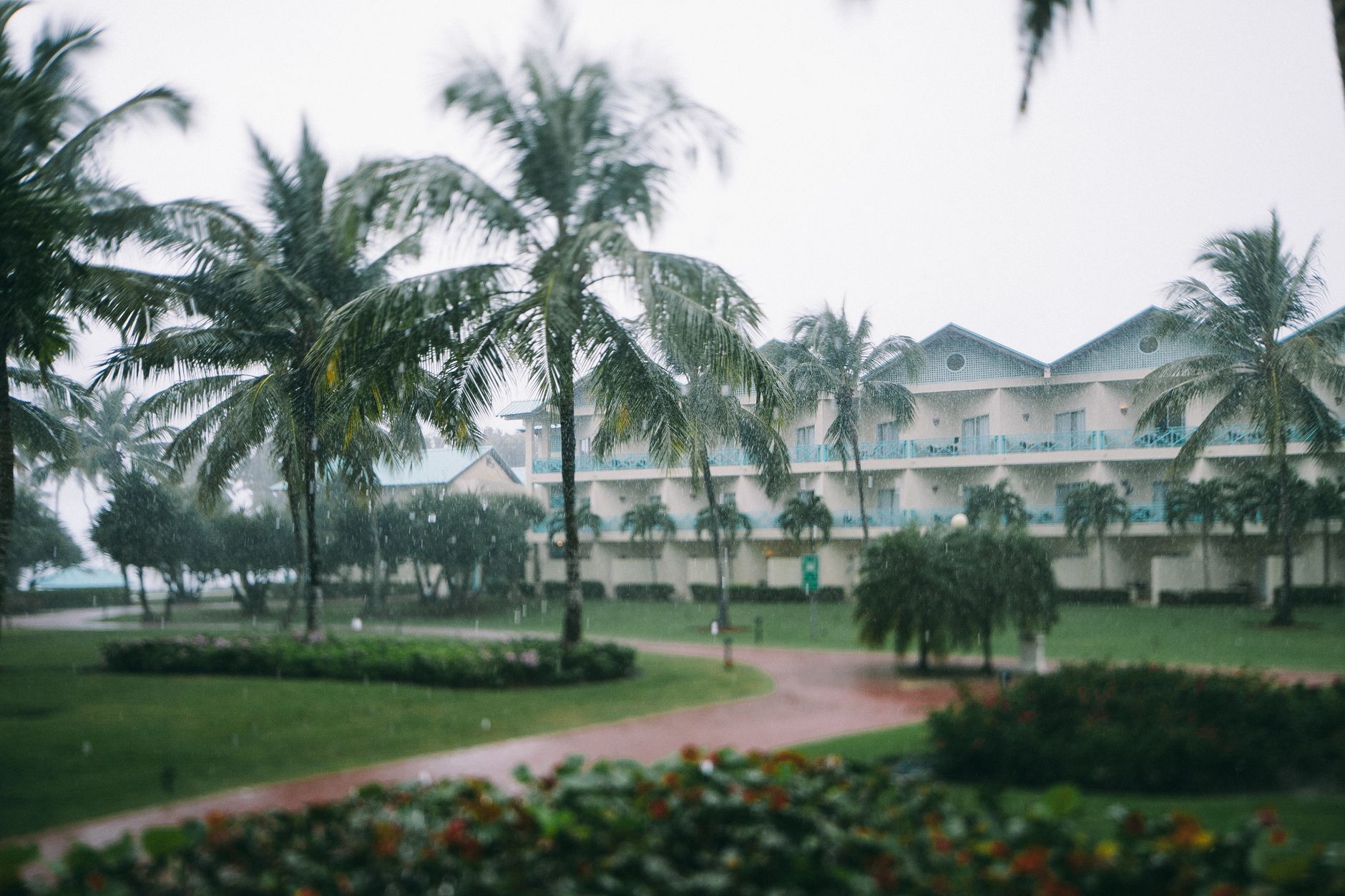
Heavy rainfall tests roofs, façades, balconies, joints, drainage and below-ground construction.
The volume of rain is only part of the issue. Duration matters too. Water that remains on a flat roof or against a wall has more time to find cracks, porous areas and failed joints.
Reduce the risk
- maintain gutters and roof outlets
- correct areas of persistent ponding where practical
- repair cracks and failed sealants
- maintain waterproofing membranes and coatings; and
- inspect parapets, penetrations and junctions before rainy periods.
High humidity
Humidity slows evaporation and can keep building materials damp for longer. Moist substrates also affect the application of many coatings and membranes.
Applying an impermeable coating over a damp substrate can trap moisture and contribute to blistering or loss of adhesion.
Reduce the risk
Check substrate moisture and follow the specified application conditions. Where walls need to release moisture, breathable protective systems may be appropriate.
Strong UV exposure
Sunlight degrades many materials over time. Exposed membranes, sealants and coatings need appropriate UV resistance or a protective layer.
UV exposure also combines with heat to age surfaces faster than water exposure alone.
Reduce the risk
Use systems designed for external exposure and maintain protective topcoats where the manufacturer requires them.
Thermal movement
Roofs and façades expand as they heat and contract as they cool. Repeated cycles can stress joints, cracks and rigid finishes.
This is why flexible or elastomeric systems are commonly used in locations where movement is expected.
Reduce the risk
Provide suitable joints, choose compatible flexible materials and avoid bridging active movement with rigid repairs.
Coastal salt exposure
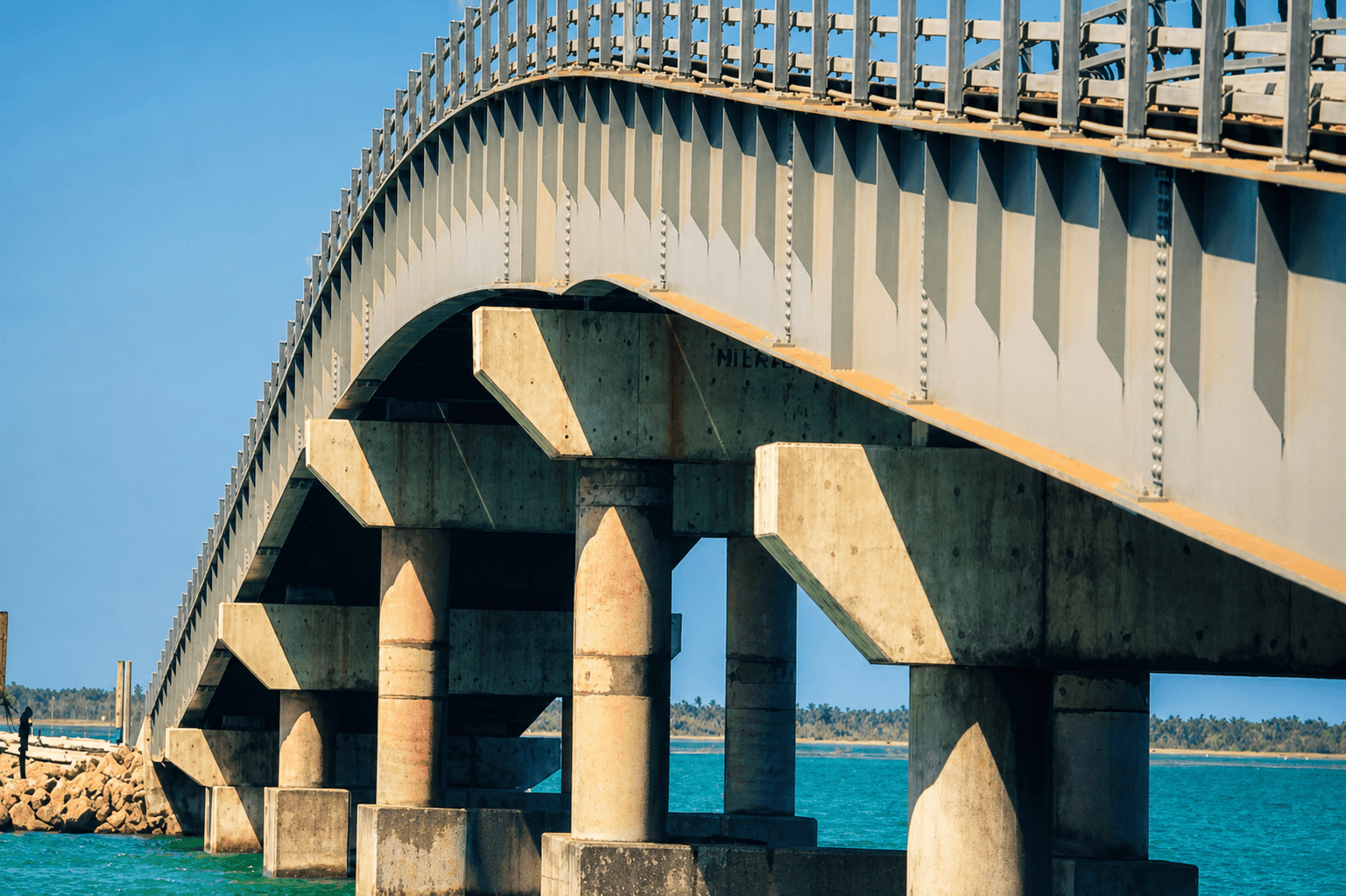
Sri Lanka has extensive coastal development. Salt carried by sea spray can deposit chlorides on exposed structures.
When chlorides reach reinforcement in sufficient concentration, they can contribute to corrosion. Corroding steel expands, cracking and spalling the concrete around it.
Reduce the risk
Good concrete quality and cover are fundamental. Waterproofing and protective coatings can also reduce ingress, while damaged concrete should be repaired before deterioration spreads.
Carbonation
Carbon dioxide from the atmosphere can penetrate concrete over time and reduce its alkalinity. When the carbonation front reaches reinforcement, the steel loses part of the passive protection normally provided by alkaline concrete.
Moisture and oxygen can then support corrosion.
H.E. Engineering provides specialised external coatings including anti-carbonation systems intended to protect concrete façades and structures.
Roof heat and indoor comfort
A roof is not only a waterproofing element; it is also a major path for solar heat gain.
Heat-reflective and thermal insulation systems can reduce roof surface temperature and heat transfer into occupied spaces when correctly designed. This can improve comfort and reduce cooling demand.
H.E. Engineering provides thermal insulation solutions alongside roof waterproofing, allowing both water and heat performance to be considered together.
Why façades need maintenance
External walls are exposed continuously but are often maintained only when appearance deteriorates.
Inspect façades for:
- hairline and larger cracks
- failed sealants
- hollow or loose render
- peeling coatings
- rust staining
- algae or persistent dampness
- defective window perimeter joints; and
- water staining beneath copings and projections.
A small façade defect can become a repeated path for wind-driven rain.
Planters and roof gardens
Green roofs, planters and landscaped terraces create special waterproofing challenges because the membrane can be difficult to access after planting.
Root-resistant waterproofing, drainage and protection layers should be designed as a system. H.E. Engineering lists root-resistant sheet and liquid waterproofing options for roof gardens and planters.
Water-retaining structures
Tanks and pools are permanently exposed to water and require materials appropriate for continuous immersion. Joints, penetrations and cracks are critical.
Waterproofing must also be compatible with the intended use of the structure, particularly where stored water has specific quality requirements.
A practical tropical-building maintenance routine
Before major rainy periods
Inspect roofs, drains, external cracks, sealants and balconies.
After heavy weather
Check for new stains, ponding, damaged coatings and blocked outlets.
Annually
Review exposed waterproofing, façade coatings, joints and concrete condition.
When defects recur
Stop repeating cosmetic repairs and investigate the underlying water path or deterioration mechanism.
H.E. Engineering in tropical environments
H.E. Engineering has operated in specialised civil engineering since 1995 and has project references across Sri Lanka and the Maldives, including hotels, resorts, infrastructure and major buildings.
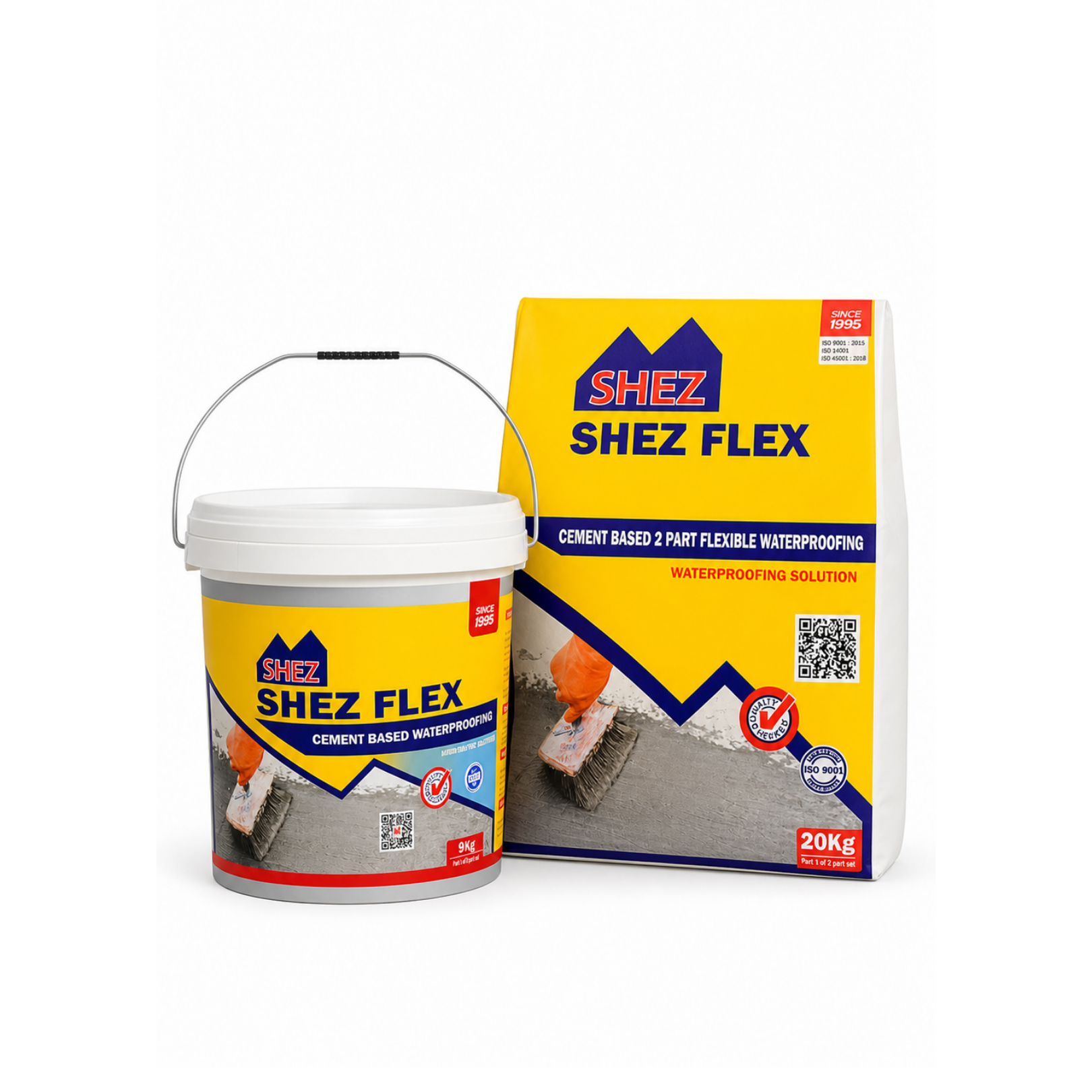
Its services include waterproofing, specialised external coatings, concrete rehabilitation, thermal insulation, industrial flooring and injection grouting. The company's SHEZ range is manufactured locally for construction applications.
Frequently asked questions
Does Sri Lanka's climate require special waterproofing?
The principles of waterproofing are universal, but high rainfall, humidity, UV and heat make exposure and detailing especially important.
Are coastal buildings more difficult to maintain?
They can face additional chloride exposure from salt-laden air, which is relevant to reinforced-concrete durability.
Can a reflective roof coating replace insulation?
Not necessarily. Reflective coatings and insulation work in different ways. The appropriate roof build-up depends on the performance objective.
How often should waterproofing be inspected?
Inspection frequency depends on the system and exposure, but routine checks before and after severe weather are sensible for accessible roofs and drainage.
Final thought
Tropical durability is not achieved by one miracle coating. It comes from combining good design, drainage, waterproofing, protective coatings, compatible materials and timely maintenance.
H.E. Engineering can assist with integrated solutions for water ingress, concrete deterioration, heat exposure and specialised building protection across Sri Lanka and the Maldives.